IMPORTANT REMINDER!

This blog is a compilation of topics about Filipino - Hispanic culture (and nothing extraordinary as the title suggest). Most of the posts here are copied from other sites and are not from my own thoughts. Please visit my other blogs, you can find the links at the right side of this blog. Thank you.

Cuidad de Zamboanga, Asia's Latin City


Officially, the City of Zamboanga (Chavacano de Zamboanga/Spanish: Ciudad de Zamboanga) is a highly-urbanized city located on the island of Mindanao in the Philippines. It is one of the first chartered cities and the sixth largest in the country. Zamboanga City is also one of several cities in the Philippines that are independent of any province, though it is usually grouped with Zamboanga del Sur for statistical purposes. The word Zamboanga is a corrupted version of the Bahasa Sug jambangan, which means garden.

Philippine Commonwealth Act No. 39 of 1936 signed by President Manuel L. Quezon on October 12, 1936 in Malacañan Palace created and established Zamboanga as a chartered city. It has been known variously as "El Orgullo de Mindanao" (The Pride of Mindanao), nicknamed the "City of Flowers," and affectionately called by Zamboangueños as "Zamboanga Hermosa" - Chavacano/Spanish for "Beautiful Zamboanga." Today, the city is commercially branded for tourism by the city government as "Asia's Latin City," a clear reference to Zamboanga's identification with the Hispanized cultures of "Latin America" or the USA's "Latino" subculture. the City was formerly a part of the Commonwealth Era Moro Province of Mindanao. Its ancient inhabitants were vassals of the Sultanate of Sulu and North Borneo.

Zamboanga City is one of the oldest cities in the country and is the most Hispanized. It is also one of the largest cities in the world in terms of area, with over 1,480 km², including its 28 surrounding islands. Its recorded population in 2007 was 774,407. Zamboanga is home to three major universities: Ateneo de Zamboanga University, Western Mindanao State University, and the newly-elevated Universidad de Zamboanga. The city contains the first Catholic diocese in Mindanao, today's Archdiocese of Zamboanga which was created in 1910 and elevated to an archbishopric in 1958.

History

The Spanish colonizers found difficulty in pronouncing “Samboangan” and instead called the place “Zamboanga”. The city has rich and colorful history. It was the center of barter trading among Chinese, Malays and the native Tausugs, Samals, Subanons, and the Badjaos as early as the 13th and 14th centuries. It was in 1569 when the Spaniards made their presence felt with a small Catholic Mission established briefly at La Caldera, now known as Recodo. The city's patron saint is La Nuestra Senora del Pilar de Zaragoza Our Lady of the Pillar of Zaragoza, Spain. A statue honoring the saint is prominently embossed above the façade on the eastern wall of Fort Pilar.

Much later on June 23, 1635, the cornerstone of what is now known as Fort Pilar was laid by Father Melchor de Vera, a Jesuit Priest-Engineer and the Spanish authorities. This date marked the change of the name of the place from Samboangan to Zamboanga. It is the city’s founding date. The meter-thick walled fort is officially called El Real Fuerza de Nuestra Señora del Pilar de Zaragoza (also called El Real Fuerza de San José in its early days).

In 1899, after the Spanish-American War in the Philippines, the United States of America defeated the forces of the unrecognized government of the Republic of Zamboanga under Gen. Vicente Alvarez y Solis thereby establishing full authority in Zamboanga. A special form of government was established in Mindanao and Sulu. Zamboanga was made the capital. The first form of which was the Moro province and during the 12 years of its existence, the American Military Government in the Philippines converted Zamboanga into a city in the Commission Form, the first province of Mindanao to become a city. However, the government of the Moro Province was abolished to give way to a new form of government, the Department of Mindanao and Sulu. This form of government entrusted to the Filipino residents of Zamboanga practically all positions in government.

The commonwealth of the Philippines on 1936 declared Zambaonga as a Charter City. Progress and development in Zamboanga continued and in 1983, the Minister Interior Jose Roño proclaimed Zamboanga City as a highly urbanized city.


Related Links: Chavacano Language, Chavacano de Cavite, Chavacano de Zamboanga
Source: Wikipedia

University of Santo Tomas [Universidad de Santo Tomas]

The Pontifical and Royal University of Santo Tomas, The Catholic University of the Philippines (or simply UST or affectionately, "Ustê"), is a private Roman Catholic university run by the Order of Preachers in Manila. Founded on April 28, 1611 by the Spanish Reverend Miguel de Benavides, it has the oldest extant university charter in the Philippines and in Asia and is one of the world's largest Catholic universities in terms of enrollment found in one campus. UST is also the largest university in the city of Manila. Having the distinction as the only Pontifical University in Asia, UST is the only university, Catholic or not, to have been visited by two popes three times: once by Pope Paul VI on Nov. 28, 1970, and twice by Pope John Paul II on Feb. 18, 1981 and January 13, 1995.

The University is composed of several autonomous faculties, colleges, schools and institutes, each conferring undergraduate, graduate and postgraduate degrees, and the basic education units. Several degrees have been accredited by the Commission on Higher Education as Centers of Excellence and Centers of Development. The Patron of the University is St. Thomas Aquinas, while St. Catherine of Alexandria is the Patroness. Prominent Thomasians include saints, Philippine presidents, heroes, artists, scientists, professionals and religious figures, who have figured well in the history of the Philippines. The athletic teams are the Growling Tigers, members of the University Athletic Association of the Philippines and are consistent winners of the Overall Championship.

History

The foundation of the University is ascribed to the Most Reverend Miguel de Benavides , O.P., the third Archbishop of Manila. He came to the Philippines with the first Dominican mission in 1587. He went on to become bishop of Nueva Segovia, and was promoted archbishop of Manila in 1601. Upon Benavides’ death in July 1605, he bequeathed his library and personal property worth 1,500 pesos to be used as the seed fund for the establishment of an institution of higher learning. Fr. Bernardo de Santa Catalina carried out Benavides’ wishes and was able to secure a building near the Dominican church and convent in Intramuros for the College.

In 1609, permission to open the College was requested from King Philip III, which only reached Manila in 1611. On April 28, 1611, notary Juan Illian witnessed the signing of the act of foundation by Frs. Baltazar Fort, OP, Bernardo Navarro, OP, and Francisco Minayo, OP. Fr. Fort, appointed that year to the post of Father Provincial, was its first Rector. The Colegio de Nuestra Señora del Santísimo Rosario was established on April 28, 1611, from the library of the late Fray Miguel de Benavídes, O.P., then Archbishop of Manila. Later renamed Colegio de Santo Tomas, it was elevated by Pope Innocent X to a university on November 20, 1645 in his brief, In Supreminenti. This made the university the second royal and pontifical institution in the Philippines, after the Jesuit's Universidad Máximo de San Ignacio which was founded in 1590 but closed in the 1768 following the expulsion of the Society of Jesus from the Philippines.

Its complete name is the The Royal and Pontifical University of Santo Tomas, The Catholic University of the Philippines (Spanish: A La Real Y Pontificia Universidad de Santo Tomas de Aquino Universidad Catolica de Filipinas). It was given the title "Royal" by King Charles III of Spain on 1785; "Pontifical" by Pope Leo XIII on 1902 in his constitution, Quae Mari Sinico, and the appellative "The Catholic University of the Philippines" by Pope Pius XII on 1947.

The university was located within the walled city of Intramuros in Manila. It was started by the Spanish Archbishop of Manila in the early 17th century as a seminary for aspiring young priests, taking its name and inspiration from Saint Thomas Aquinas, a Dominican theologian. The first courses offered by the Colegio de Santo Tomas were canon law, theology, philosophy, logic, grammar, the arts, and civil law. In 1871, it began offering degrees in Medicine and Pharmacy, the first in colonized Asia.

At the beginning of the 20th century, with the growing student population, the Dominican fathers bought land at the Sulucan Hills in Sampaloc, Manila and built its 215,000 square meter campus there in 1927 with the inauguration of its Main Building (the first earthquake-proof building in the Philippines). Also that year, it began accepting female enrollees. In the last four decades, the university grew into a full-fledged institution of higher learning, conferring degrees in law, medicine and various academic letters. The university has graduated Philippine national heroes, presidents, and even saints.

During World War II, the Japanese converted the campus into a concentration camp for civilians, foreigners and POWs. Some of the most brutal war crimes against American soldiers (Filipino soldiers were granted amnesty) and civilians living abroad occurred in Santo Tomas.

Since its establishment in 1611, the University's academic life was interrupted only twice: from 1898 to 1899, during the Philippine Revolution against Spain, and from 1942 to 1945, during the Japanese occupation of the country. In its long history, the university has been under the leadership of more than 90 Rectors. UST's first Filipino rector was Fr. Leonardo Legaspi, O.P. who served UST from 1971-1977. Its current rector is Fr. Rolando V. de la Rosa, O.P.

In recognition of its achievements, a number of important dignitaries have officially visited the university, among them, during the last three decades: His Holiness Pope Paul VI on November 28, 1970; His Majesty King Juan Carlos I of Spain in 1974 and 1995; Mother Teresa of Calcutta in January 1977 and again in November 1984; Pope John Paul II on February 18, 1981 and January 13, 1995 (as part of the World Youth Day 1995). Today UST has a total enrollment of approximately 38,000 students, 33,000 undergraduates and 5,000 students in Medicine, Law and the Graduate School. The University admits about 10,000 new students out of 50,000 applicants per year, roughly 20%.


Source: Wikipedia

Mexicans of Filipino descent

The Mexican Flag

Mexicans of Filipino descent refers to Mexican citizens who are descendants of Filipino origin. There are currently 200,000 Mexican peoples who have mixed Filipino ancestry. They form around (0.2%) of the population and its communities are found in Michoacán, Guerrero, and Colima.

Most of their Filipino ancestors arrived in Mexico during the Spanish colonial period. For two and a half centuries, between 1565 and 1815, many Filipinos and Mexicans sailed to and from Mexico and the Philippines as sailors, crews, slaves, prisoners, adventurers and soldiers in the Manila-Acapulco Galleon assisting Spain in its trade between Asia and the Americas. Some of these sailors never returned to the Philippines. Most settled in and integrated into the Mexican society. In the late 19th and early 20th century many Filipinos came to Mexico as refugees from Spain during Francisco Franco’s dictatorship. These Filipinos from Spain were descendants of Filipino and Filipino mestizo settlers who entered Spain after the Spanish-American war.

Smaller waves of Filipino migration to Mexico took place in the late 19th and 20th centuries after the Philippines was annexed by the U.S. during the Spanish American war of 1898-1900. About 20,000 Filipino farm laborers and fishermen arrived to work in the Mexican west coast. These areas included the Baja California, Sonora and Sinaloa, while some had awaited to enter the United States to reunite with family members in Filipino American communities in California, and elsewhere. Mexican immigration law continues to grant special status for Filipinos, and from 1970 to 2005 about 100,000 Filipino immigrants came to Mexico.

In modern times, Mexicans of mixed Filipino ancestry had lived in Mexico for many centuries; their descendance are found in large communities particularly in the state of Guerrero, and Colima. Most of these individuals are mixed blood peoples, and trace half or a quarter of their ancestry and origin back to the Philippine Islands, and the Manila-Acapulco Galleon period. Today, newly arrived Filipinos are overseas or contract workers who came to Mexico to obtain employment. Most of these individuals speak both Filipino, and other Philippine languages.

Source: Wikipedia

Binondo, Manila [Chinatown]

Plaza San Lorenzo Ruiz and Binondo church


Binondo is an enclave in Manila primarily populated by Chinese immigrants living in the Philippines. Historically, the place called Parían near Intramuros was where the unconverted Chinese immigrants (called Sangley by the Spaniards) lived while Binondo was the place where the converted sangleys and their descendants, the mestizos de sangley or Chinese mestizos resided. The Parian was sited by the Spaniards within the range of Intramuros cannons, to prevent any uprising coming from the Chinese.

Binondo is located across the Pasig River from Intramuros and the home of Chinatown (said to be the oldest in the world) in Manila. The district is the center of commerce and trade for all types of businesses run by Chinese merchants. It is said that this district was already a hub of Chinese commerce even before the Spaniards came in 1571.

Founded in 1594, Binondo was created by Spanish Governor Luis Pérez Dasmariñas as a permanent settlement for converted Chinese immigrants across the river from the walled city of Intramuros where the Spaniards resided. It was originally intended to replace the Parian near Intramuros where the Chinese were confined. The land grant was given to a group of Chinese merchants and artisans in perpetuity, tax-free and with limited self-governing privileges.

The Spanish Dominican fathers made Binondo their parish and succeeded in converting a great many of the Chinese residents to Catholicism. Binondo soon became the place where Chinese immigrants converted to Catholicism, intermarried with indigenous Filipino women and procreated to produce a nascent Chinese mestizo community. Over the years, the Chinese mestizo population of Binondo grew rapidly. This was caused by two factors: the lack of Chinese immigrant females and the policies of the Spanish authorities in expelling and massacring pure-blooded Chinese immigrants who refused to convert. Luis Pérez Dasmariñas played a prominent role in the massacre of 20,000 Chinese after a Chinese revolt in 1603.

Binondo is the historic birthplace of a new race called mestizo de sangley. It was also the birthplace of St. Lorenzo Ruiz, a mestizo de sangley who would later become the First Filipino Saint and also Mother Ignacia del Espiritu Santo, who is also a mestiza de sangley and was the foundress of the Congregation of the Religious of the Virgin Mary. Plaza Lorenzo Ruiz and the Binondo Church (formal name: Minor Basilica of St. Lorenzo Ruiz) are named after him. And the Chapel of Our Lady of China now in Binondo Church.

ChinaTown, Binondo, Manila


Links: Chinatown, Chinatown Adventure, Binondo, Revisited

In Focus: The Asia's Queen of Songs, Pilita Corrales


Pilita Garrido Corrales (born August 22, 1939 in Cebu City, Philippines) is a famous Filipina singer and actress, who is widely referred to as Asia's Queen of Songs, having produced over 135 albums in her music career spanning over four decades.

Corrales has two children, Lourdes Jacqueline Blanco (commonly known as "Jackielou" Blanco) and Ramón Christopher Gutíerrez. Both her two children are also well known celebrity figures in the Philippine Film Industry. Corrales was married in 1963, to the late executive businessman Gonzalo Blanco and separated soon after, while her daughter "Jackielou" was still a child. Gonzalo later died in 1981. Corrales gave birth to her second child, Ramón Christopher, in 1971. Ramón's father is actor Eddie Gutíerrez. On May 22, 2001, Pilita married Paraguayan businessman Carlos Lopez.

Pilita Corrales was born in Lahug, Cebu City, Cebu in 1939. Her father was a Spaniard and her mother was Cebuana. She is multi-lingual and speaks Spanish, English, Tagalog, and Cebuano fluently. After finishing her studies at Colegio de la Inmaculada Concepcion in her native land of Cebu, she went to Spain to enroll in a finishing school in music. In 1958, Pilita began her recording career after arriving with a shipwrecked troupe of performers in Melbourne. She left her mark by becoming the first woman to make the Australian pop charts with a local recording called 'Come Closer to Me'. She became a star of the Melbourne TV circuit and her first hit, Come Closer to Me, became part of a collection on which she’s billed as one of the Grand Dames of Melbourne Radio and Television.

Pilita holds the distinction of being the first female artist to top the Australian pop music charts long before Helen Reddy, Olivia Newton-John and Kylie Minogue. Pilita also recorded at least 3 LPs in the late 1950s-early 1960s: Pilita with Arthur Young: Pilita tells The Story of Love, I'll Take Romance and This is Pilita under Astor Records. Being one of the pioneers of Australia's early television years, a street was named after her outside Melbourne. The Australian Broadcasting Corporation (ABC) recently featured Pilita and several pioneering female artists in Australia in the 2nd episode of the highly acclaimed TV special, Love is in the Air. Pilita returned to Manila during the mid 1960s to pursue a career in the Philippine music industry.

Her Philippine career began when she hosted a radio program La Taverna over DZPI where she sang Spanish songs and played the guitar. She performed regularly in stage shows at the Manila Grand Opera House. Subsequently, her reputation grew and during her international stints, she has performed with internationally acclaimed artists like Sammy Davis Jr. the Beatles, Bob Hope, Pat Boone, Frank Sinatra and Julie Andrews. She also appeared in movies, most of them musicals. Her film debut was a lead role in the 1968 film Miss Wawaw, and was followed by 11 more movies for the next two years. Pilita later recorded numerous albums in Spanish in the early 60s as well as numerous long playing albums in English, Tagalog and Cebuano during the 1970s under Vicor Music Corporation. Her multiawarded TV program at ABS-CBN, An Evening with Pilita (1965-1972), is widely considered as one of the benchmarks in Philippine broadcasting history.


Pilita frequently performed for Seeing Stars with Joe Quirino in IBC-Channel 13 after the martial law years where she demonstrated her range as a gifted performer of Spanish, English, Cebuano and Tagalog music. Aquarius Record Philippines produced a compilation of Pilita's Spanish songs in CDs like Noche de Ronda, Vaya Con Dios. Her signature song A Million Thanks to You was translated in seven languages. She eventually recorded songs composed by Filipino composers like Danny Holmsen, George Canseco, Willy Cruz, Ryan Cayabyab and several others. Under Vicor Records, Pilita interpreted numerous Filipino classics and introduced them to younger audiences.

Pilita first met Canseco in Your Evening with Pilita (aired on pre-Martial Law ABS-CBN) as a guest in the composers' portion of the show". For the show Canseco brought with him You're All I Love. Canseco later wrote Filipino lyrics for the song, which became Kapantay ay Langit, the first song Canseco sold to a record label in 1966. The song was first recorded by Amapola for the movie theme of Kapantay Ay Langit starring Marlene Dauden and Eddie Rodríguez. The song won for George Canseco and Amapola the Manila Film Festival award for best song of the year. The song did not fare well commercially, because Amapola had left (for her U.S. concert tours) and the song was not promoted properly, according to Canseco during an interview with the Philippine Daily Inquirer. But when Pilita revived the song, it turned into a classic and defied trends and time. "The song," Pilita said, "was included in my album Philippine Love Songs Vol. 1, which was released in the early 1970s."

Through the personal invitation of Sammy Davis Jr., Pilita became the first Filipino to sing in Caesars Palace. In her concert in Caesars Palace, Las Vegas during the late 70s, Pilita sang Spanish, English, Cebuano and Tagalog songs, all conducted and arranged by Ryan Cayabyab.

After receiving a 1965 Philippine Citizen's Award for TV as Best TV Female Performer, Pilita went on to receive Cecil, Aliw, Tinig and Awit and several other awards for her performances and lifetime achievement. In 1990, she received a Merit Award from the FAMAS Awards. In 1991, she was given a Lifetime Achievement Award by the Philippine Association of the Record Industry (PARI) for bringing Filipino musical artistry to international audience. She also holds the distinction of being the first Filipino to win in an international music festival by bagging the Best Performer Award during the 1st Tokyo Music Festival (1972) where she bested numerous international artists including the highly-regarded Olivia Newton-John.


These days she operates Pilita, a restaurant-bar in Greenhills named: PILITA'S, one of Manila's prime commercial districts. She is also a highly-acclaimed host and comedy actress on Philippine television. With over 135 albums to her credit and an international profile with many appearances in Asia, the Middle East, Australia and North America, she still enjoys a reputation as “singing icon and living legend.”

In 2006, Pilita Corrales was handpicked by Associated Broadcasting Company (ABC Channel 5) and FremantleMedia to be one of the celebrity-judges for the first-ever nationwide search for the Philippine Idol together with composer Ryan Cayabyab and rapper Francis Magalona. She was a judge in the first Asian Idol held in Indonesia, representing Philippine Idol.


Clips from Autralian TV Channel Documentary


"Somos Novios"


Link: Buy Pilita's Spanish albums, 'Noche de Ronda' and 'Vaya Con Dios'.


Source: Wikipedia

Chicharon [Chicharones]: In Latin America And The Philippines


Chicharónes is very popular in Andalusia, Spain, Latin America and the Philippines. It is part of the traditional cuisines of Guatemala, Belize, Bolivia, Cuba, Mexico, Venezuela, Honduras, Dominican Republic, Nicaragua, Colombia, Panama, Brazil (where it is called torresmo), Peru, and the Philippines. The singular form, chicharón, is also used as a mass noun, especially in the Philippines. They are usually made with different cuts of pork, but sometimes made with mutton. In Puerto Rico chicharones are also made with chicken, in Argentina with beef, and in Peru with chicken or fish.

The pork rind type is the skin of the pork after it has been seasoned and deep fried. In Mexico they are eaten in a taco or gordita with salsa verde. In Latin America they are eaten alone as a snack, with cachapas, as a stuffing in arepas or pupusas, or as the meat portion of various stews and soups.

In central Venezuela, chicharones are commonly sold alongside main highways as snacks. The recipe usually produces crispy sizeable portions of pork skin with the underlying meat.

In Peru, chicharrones can be eaten as an appetizer or snack, and the chicken variant can taste like fried chicken found in the United States. Sides include a kind of red onion relish, fried yuca, and other regional variants. The cueritos type are also made with pork skin and marinated in vinegar instead of deep fried. They are eaten as a snack.

In Mexico, snack-food company Barcel has commercialized a vegetarian version with chile and lime flavorings since the 1980s. Chicharon de Puerco is considered in Mexico as a top quality snack, it could be found anywere, chicharon de cerdo is distributed by many different salty snacks companies like Sabritas SA de R L.

In The Philippines,  It is usually eaten with vinegar mixed with salt, garlic and hot 'Labuyo'chilis. It is also used as a main ingredient in food such as Pancit Palabok, Pancit Malabon and La Paz Batchoy. There are many different kinds of chicharon in the Philippines, aside from the traditional pork chicharon, they also have chicken skin chicharon, chicharon bulaklak (flower) which is made of cows intestines and when cooked it looks similar to a flower, hence the name, and Chicken intestine chicharon is also popular . Here, chicharon is usually eaten as "Tapas" or what Filipinos called "Pulutan", accompanied with beer or other alcoholic drinks.

In Bolivia, chicharon is made out of pork ribs seasoned with garlic, oregano and lemon. It is boiled then cooked in its own fat, adding beer or chicha to the pot for more flavor. Pork chicharron is normally served only on Sundays and is eaten with llajua, a tomato salsa, and mote, a type of corn. There are other variations of chicharon made with chicken and fish.

In the Dominican Republic chicharrones, specially chicken chicharrón (also known as pica-pollo), are usually eaten with tostones. The way to prepare it is by washing and drying chicken and cutting it into small pieces, which are seasoned with a mix of lemon juice, soy sauce and salt. The batter is made from flour, pepper, paprika and salt in plastic bag, in which the seasoned meat is then placed and shaken. Pieces are deep-fried (without removing excess flour) until crisp and golden.


Source: The Wikipedia

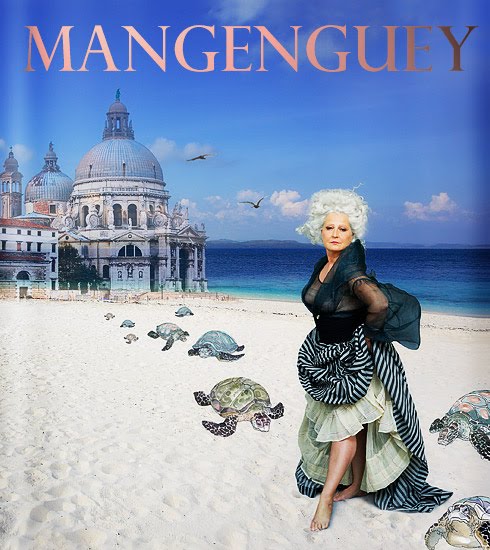
The Mangenguey Island Society [Exclusive Resort In The Calamianes Islands]


Owned by Helena Carratala Mander

Located in Palawan Island, it is a splendid and peaceful location that sits on the clear waters of The Philippine Archipelago. Offering untouched beauty, it provides access to center of the Coral Triangle, and is blessed with natural wonders like limestone cliffs, orchids, and pure blue waters, as well as breathtaking natural scenery. Founded by design visionary Helena Carratala Mander and her husband master builder Richard Mander, they focus creating a Utopia, offering untouched nature at its best.

The resorts interior is architecturely designed to show off classical forms with indigenous materials creating a cultural fusion called Native Baroque. Boasting incredible rooms that have views of the ocean and and surrounding islands, it is the perfect getaway. They also feature various activities like water sports, bird watching, island hopping with gourmet picnics, or taking in the gorgeous view. A resort that not only offers a vacation but gives you the Filipino cultural experience, stylist and artistic accommodations and is a perfect example of Utopian Living.


Find out more about the beautiful Island, the exclusive Resort and how to get there,


Santo Niño de Cebu


The Santo Niño de Cebú ("Holy Child of Cebu") is a Roman Catholic depiction of the Child Jesus, similar to the Infant Jesus of Prague, and other venerated statues. Like them, it is clothed in textile robes. For centuries Santo Nino served as the patron saint of Cebu, and continues to be celebrated at the Sinulog, the primary festival of Cebú.But now, the patron saint of Cebu is the Our Lady of Guadalupe since Jesus cannot be a patron saint. It is located at the Basilica Minore del Santo Niño in Cebu City, Cebu, Philippines.

In April 1521, Portuguese explorer Ferdinand Magellan, in the service of Charles I of Spain, arrived in Cebu during his voyage to find a westward route to the Spice Islands [1]. He persuaded Rajah Humabon and his wife Hara Humamay, to pledge their allegiance with Spain. They were later baptized into the Catholic faith, taking the Christian names Carlos and Juana. Magellan gave Juana the Santo Nino as a symbol of the alliance. However, Magellan died during the Battle of Mactan later that month, and the alliance became more or less moot.

The Spanish returned to the Philippines in February 1565. Cebu was the first stop of Basque explorer Miguel López de Legazpi, who would later found Manila. He defeated Rajah Tupas (nephew to Humabon) on April 27, destroying the village in the process. The Santo Nino was found relatively unscathed in a burnt-out dwelling. This event was quickly acknowledged as miraculous, and a church was later constructed on the purported site of the discovery. Today, the Basilica Minore del Santo Niño is an important historical and religious landmark in Cebu, with devotees forming long line up to pay their respects to the Holy Child.

The Holy See has approved special liturgical texts for use during the local Feast of the Santo Niño in the Philippines, set on the third Sunday of January. The festival that follows is known as the Sinulog, which combines the street festivities and religious devotion of the Cebuano people.
The Santo Niño was long considered to be the patron "saint" of Cebu. However, the Santo Niño is a representation of Jesus Christ as a child. The Catholic Church in the Philippines sets the Holy Child as an example of humility and as a celebration of the Incarnation. Many Cebuanos do not consider the Christmas Season over until the Feast of the Santo Niño.
With this in mind, in 2002, the Archbishop of Cebu, Ricardo Cardinal Vidal, declared Jesus' mother Mary, under the title of Our Lady of Guadalupe to be the principal patroness of Cebu. This upset some Santo Niño devotees, who felt that the declaration "demoted" the Holy Child. However, the declaration is consistent with Catholic thought requiring a patron saint be a human saint who has gone to his or her heavenly reward and who prays to God on behalf of the living, rather than a divine being himself.
Since the Holy Child is a representation of Jesus, the Second Person of the Trinity, he cannot, as God, be considered a patron. In that sense, Cardinal Vidal's move was to actually install a patron saint for Cebu, when before there was none. He did not, however, abolish the feast or the traditional street celebrations. There are various Filipino American prayer groups in the United States that celebrate a Novena to Santo Niño. The novena begins with a recitation of the rosary, followed by various Philippine native songs and prayers. These prayers include a thanksgiving prayer, a blessing for the hosting family, an act of consecration prayer, and a prayer for the sick.


Basilica Minore del Santo Niño

Dr. Jose P. Rizal by Teofilo H. Montemayor

"It is a useless life that is not consecrated to a great ideal. It is like a stone wasted on the field without becoming a part of any edifice." - Dr. Jose P. Rizal


Dr. Jose P. Rizal by Teofilo H. Montemayor


Jose Rizal, the national hero of the Philippines and pride of the Malayan race, was born on June 19, 1861, in the town of Calamba, Laguna. He was the seventh child in a family of 11 children (2 boys and 9 girls). Both his parents were educated and belonged to distinguished families.

His father, Francisco Mercado Rizal, an industrious farmer whom Rizal called "a model of fathers," came from Biñan, Laguna; while his mother, Teodora Alonzo y Quintos, a highly cultured and accomplished woman whom Rizal called "loving and prudent mother," was born in Meisic, Sta. Cruz, Manila. At the age of 3, he learned the alphabet from his mother; at 5, while learning to read and write, he already showed inclinations to be an artist. He astounded his family and relatives by his pencil drawings and sketches and by his moldings of clay. At the age 8, he wrote a Tagalog poem, "Sa Aking Mga Kabata," the theme of which revolves on the love of one’s language. In 1877, at the age of 16, he obtained his Bachelor of Arts degree with an average of "excellent" from the Ateneo Municipal de Manila. In the same year, he enrolled in Philosophy and Letters at the University of Santo Tomas, while at the same time took courses leading to the degree of surveyor and expert assessor at the Ateneo.

He finished the latter course on March 21, 1877 and passed the Surveyor’s examination on May 21, 1878; but because of his age, 17, he was not granted license to practice the profession until December 30, 1881. In 1878, he enrolled in medicine at the University of Santo Tomas but had to stop in his studies when he felt that the Filipino students were being discriminated upon by their Dominican tutors. On May 3, 1882, he sailed for Spain where he continued his studies at the Universidad Central de Madrid. On June 21, 1884, at the age of 23, he was conferred the degree of Licentiate in Medicine and on June 19,1885, at the age of 24, he finished his course in Philosophy and Letters with a grade of "excellent."

Having traveled extensively in Europe, America and Asia, he mastered 22 languages. These include Arabic, Catalan, Chinese, English, French, German, Greek, Hebrew, Italian, Japanese, Latin, Malayan, Portuguese, Russian, Sanskrit, Spanish, Tagalog, and other native dialects. A versatile genius, he was an architect, artists, businessman, cartoonist, educator, economist, ethnologist, scientific farmer, historian, inventor, journalist, linguist, musician, mythologist, nationalist, naturalist, novelist, opthalmic surgeon, poet, propagandist, psychologist, scientist, sculptor, sociologist, and theologian.

He was an expert swordsman and a good shot. In the hope of securing political and social reforms for his country and at the same time educate his countrymen, Rizal, the greatest apostle of Filipino nationalism, published, while in Europe, several works with highly nationalistic and revolutionary tendencies. In March 1887, his daring book, NOLI ME TANGERE, a satirical novel exposing the arrogance and despotism of the Spanish clergy, was published in Berlin; in 1890 he reprinted in Paris, Morga’s SUCCESSOS DE LAS ISLAS FILIPINAS with his annotations to prove that the Filipinos had a civilization worthy to be proud of even long before the Spaniards set foot on Philippine soil; on September 18, 1891, EL FILIBUSTERISMO, his second novel and a sequel to the NOLI and more revolutionary and tragic than the latter, was printed in Ghent. Because of his fearless exposures of the injustices committed by the civil and clerical officials, Rizal provoked the animosity of those in power. This led himself, his relatives and countrymen into trouble with the Spanish officials of the country. As a consequence, he and those who had contacts with him, were shadowed; the authorities were not only finding faults but even fabricating charges to pin him down. Thus, he was imprisoned in Fort Santiago from July 6, 1892 to July 15, 1892 on a charge that anti-friar pamphlets were found in the luggage of his sister Lucia who arrive with him from Hong Kong. While a political exile in Dapitan, he engaged in agriculture, fishing and business; he maintained and operated a hospital; he conducted classes- taught his pupils the English and Spanish languages, the arts.

The sciences, vocational courses including agriculture, surveying, sculpturing, and painting, as well as the art of self defense; he did some researches and collected specimens; he entered into correspondence with renowned men of letters and sciences abroad; and with the help of his pupils, he constructed water dam and a relief map of Mindanao - both considered remarkable engineering feats. His sincerity and friendliness won for him the trust and confidence of even those assigned to guard him; his good manners and warm personality were found irresistible by women of all races with whom he had personal contacts; his intelligence and humility gained for him the respect and admiration of prominent men of other nations; while his undaunted courage and determination to uplift the welfare of his people were feared by his enemies.

When the Philippine Revolution started on August 26, 1896, his enemies lost no time in pressing him down. They were able to enlist witnesses that linked him with the revolt and these were never allowed to be confronted by him. Thus, from November 3, 1986, to the date of his execution, he was again committed to Fort Santiago. In his prison cell, he wrote an untitled poem, now known as "Ultimo Adios" which is considered a masterpiece and a living document expressing not only the hero’s great love of country but also that of all Filipinos. After a mock trial, he was convicted of rebellion, sedition and of forming illegal association. In the cold morning of December 30, 1896, Rizal, a man whose 35 years of life had been packed with varied activities which proved that the Filipino has capacity to equal if not excel even those who treat him as a slave, was shot at Bagumbayan Field.

Read more about Jose Rizal, free from the Phillipine Commission on Higher Education and others, at www.joserizal.ph.

Rizal Monument in Luneta Park, Manila

Links: Poems of Dr. Jose Rizal, La Guirnalda Polar [en Castellano]
Source: James Logan Courier of James Logan High School.

Poems by Dr. Jose P. Rizal [en Castellano]

"Canto de Maria Clara"


"A La Juventud Filipina"

"A La Juventúd Filipina" y "Canto de Maria Clara" , por José Rizál. Recitada por la Sra Doña Delfina San Agustín de González (1905-1992) - Recitadora Filipina en Castellano. La estrella mas grande del teatro Español en Las Filipinas.

Source : You Tube;

Para escuchar más poemas del Dr. José Rizal y otros en Español, haga clic AQUI.

A Jose Rizal por Teofilo H. Montemayor.

In Focus: Jaime Zobel de Ayala and Family (Ayala Corporation & Premio Zobel)


THE ZOBEL DE AYALA FAMILY

The Zóbel de Ayala clan is an affluent Filipino business family with ancestry from the Philippines, and northern Spain’s mountainous region of Álava descending from the lineage of Juan Larrazábal Ayala (circa 1475), an influential landowner. Patriarch Antonio de Ayala sailed for Manila in the 1800s and established an industrial partnership with Domingo Roxas, a descendant of Mexican immigrant Antonio Fernández de Roxas of Acapulco, who migrated to the Philippines in 1695, and later with Dr. Johannes Andreas Zobel, a German pharmacist from Hamburg who settled in Manila in 1832.

The clan has been residing in the Philippines for more than 20 generations. Historically, the family has been well-known for their socio-economic and cultural contributions to the country such as the pioneering of Manila's first rail system in the 1900's, establishing the oldest existing financial institution in Southeast Asia, as well as the construction of the first steel bridges in the Philippines.

The Zóbel de Ayalas own and control the Ayala Corporation, the country's largest and oldest conglomerate that includes the Bank of the Philippine Islands, Ayala Land Inc., the Manila Water Company, and Globe Telecom, one of the largest mobile phone networks in the Philippines. The Ayala Corporation was also responsible for developing large areas of Makati City into residential subdivisions (gated communities) between the 1940s and 1960s. These subdivisions include Forbes Park, Dasmariñas Village, Bel-Air Village, San Lorenzo Village, Urdaneta Village and Magallanes Village.

In addition, Ayala Corporation later developed the center of Makati into a mixed-use industrial development now known as the Ayala Center and its surrounding throughfares (Ayala Avenue, Makati Avenue, Paseo de Roxas & Sen. Gil Puyat Ave.), which now comprise the Makati skyline. In 2001, the family acquired the 54-hectare Fort Bonifacio Global City development in Metro Manila. Other industrial and real estate developments also exist in other parts of Luzon and Cebu including several international partnerships in banking, construction and Information Technology.

The De La Salle-Santiago Zóbel School was named after Jacobo Santiago Zóbel (1954-1965), the eldest son of Enrique Zobel. The Premio Zobel Award has been annually given by the family for the past eighty years in recognition to outstanding citizens who propagate the intellectual development of the country. The prestigious Ayala Foundation has been assisting the country's struggling cultural heritage and development for many years.

CEO Jaime Augusto Zóbel de Ayala II is among the three Filipino individuals included in the Forbes magazine's list of the World's Richest people, ranking 349th in 2007.

Zobel de Ayala Patriachs' resting place in San Agustin Church, Intramuros, Manila

The Ayala Family &Premio Zobel's History


THE AYALA CORPORATION

Ayala Corporation is a holding company for the diversified interests of the Ayala Group. It was founded in 1834 and is the oldest and largest conglomerate operating in the Philippines. The company has a portfolio of diverse business interests including investments in real estate, banking, telecommunications, electronics, information technology, water infrastructure and management and business process outsourcing.

In the late 1800s, Ayala participated in the construction of the Colgante and the Ayala bridges and in 1888, it introduced the first tramcar service in the Philippines. Ayala was mainly responsible for the development of Makati as the financial district of the Philippines.

Ayala was recently named (2007) by Asiamoney as the country's best managed large-capitalization company.


Source: The Wikipedia and You Tube

The Feast Of The Black Nazarene And The Quiapo Church


No Comment [Euronews] from 2008 Feast of the Black Nazarene

Quiapo’s Black Nazarene
Now A National Patron


Today is the grand fiesta of the Quiapo district of the City of Manila. It marks the end of the novena to Jesus the Black Nazarene that always starts on New Year’s Day. But unlike previous years—but like 2006, when the nation celebrated the 400th anniversary of the arrival of the life-size Black Nazarene sculpture in wood of Jesus Christ in the costume of a royal personage bearing the cross of Calvary and wearing a crown of thorns—the procession in honor of Nuestro Padre Jesus Nazareno (Our Father Jesus Nazarene) starts at the Luneta. It leaves the Luneta right after the 8 a.m. High Mass celebrated by Archbishop of Manila Gaudencio Cardinal Rosales.

Public safety drove Manila’s Church and police authorities to change the venue of the High Mass and procession from Quiapo church itself to the Luneta. The average participation has grown in the past decade to 80,000, which according to news reports quoting police officials, poses extraordinary hazards to the public.

A Most Spectacular Religious Event

The feast of the Black Nazarene is viewed by Manilans—and now people of many other cities that have also mounted High Masses and the Black Nazarene procession on January 9, making it a national feast day—as one of the most spectacular and deeply pious religious events in our country.

Here is the late National Artist for Literature Nick Joaquin’s description of the procession, written in 1979 for Mr. and Ms. Publications’ Almanac for Manileños:

“To Quiapo’s fiesta procession speed wave on wave and horde upon horde of all Manila’s maledom: kanto boy and matón, jeep driver and stevedore, the siga and the sikat—all in the classic get-up of the Quiapo panata: towel round the neck, rolled-up trousers, bare feet, and white T-shirt printed with the face of Christ and the text Hijos del Nazareno*.

And all, from 13 years and up, have come to prove themselves macho in the roughest, rowdiest, ruggedest procession in the city’s year. And what a spectacle it is: that rumbling sea of heads in the midst of which, now sinking and now rising, now tottering and now falling, now rushing and now lagging, suddenly appears uplifted over the tumult, dark and dazzling, terrible and triumphant: the Lord of Downtown.”

Continue reading, The Manila Times Internet Edition article on feast of the Black Nazarene.

Listen to the official Song of Nuestro Padre Jesus Nazareno


Quiapo Church

Quiapo Church, officially known as Minor Basilica of the Black Nazarene, is a Roman Catholic church located in the District of Quiapo, Manila, in the Philippines. The church is one of the most popular churches in the country. It is home to the Black Nazarene, a much venerated statue of Jesus Christ which many people believe has miraculous attributes. The church was painted cream after the original Mexican Baroque edifice was burned down in 1928. It is expanded to its current form in 1984 for accommodation of thousands of devotees. Also known as St. John the Baptist Parish, the church at present belongs to the Archdiocese of Manila. The current rector is Rev. Msgr. Jose Clemente Ignacio, who succeeded Msgr. Josefino Ramirez (the Vicar General of the archdiocese) upon the latter's appointment as rector of the Archdiocesan Shrine of the Divine Mercy in Maysilo, Mandaluyong City. Assisting Msgr. Clem are his vice-rector Fr. Fernando Carpio and parochial vicar Fr. Alvin Fullon.

When Governor General Santiago de Vera founded the District of Quiapo on August 29, 1586, the Franciscan Missionaries built the first church of Quiapo with Bamboo and Nipa. San Pedro Bautista, a Franciscan missionary at that time was one of the founders of the Quiapo church, thus his image is located at one of the side niches of the church. San Pedro Bautista founded many churches in Metro Manila and Laguna. The famous of them all is the one at San Francisco Del Monte, the parish that is named after him and houses the Holy Cave for missionaries that went to China and Japan during those days. Unfortunately, this church was burned in 1639. Rebuilding and repairs at intervals gave the parish a stronger edifice which the earthquake of 1863 partially destroyed. Under the supervision of Fathers Eusebio de Leon and Manuel Roxas, the third church was completed in 1899, with Fr. Roxas raising PhP. 40,000.00 from contributions. In the fire of October 30, 1928, the church was left in ruins leaving its scarred walls and belfry. Dona Encarnacion Nakpil de Orense, head of the Parish Committee, raised funds for the reconstruction of the church and National Artist for Architecture Juan Nakpil was made responsible for the church's rebuilding. Miraculously, the church survived the ravages of the Second World War, despite its surrounding buildings being completely destroyed.

Church Murder

In 1975 Bishop Hernando Antiporda was appointed parish priest. He was just beginning to make improvements in the parish when he was brutally murdered, together with assistant parish priest, Rev. Fr. Raymundo Costales in the early morning of December 13, 1975. Robbery was believed to be the motive. The culprits strangled the bishop with a cord, and they stabbed the co-adjutor on the neck with a broken bottle.

Expansion

To meet the needs of an ever-increasing number of churchgoers, Msgr. Jose Abriol, together with Architect Jose Ma. Zaragoza and Engr. Eduardo Santiago, worked hard in 1984 to have the parish church and national shrine remolded. Thus this sacred edifice has doubled in holding capacity and has acquired a most sturdy columnless structure and modern architectural beauty. Cardinal Sin blessed it on September 28, 1987. The year after, Quiapo Church was declared the Minor Basilica of the Black Nazarene. The Papal Nuncio, Most Rev. Bruno Torpigliani, blessed the altar of San Lorenzo Ruiz on February 1, 1988.

The Black Nazarene

The Augustinian Recollect Friars brought the image of the Black Nazarene to the Church of San Juan Bautista in Bagumbayan, now part of Luneta/Rizal Park on May 31, 1606. The image was transferred to the bigger Recollect church of San Nicolas de Tolentino in 1608. In 1787, Basilio Sancho de Santas Junta y Rufina, S.P., then Archbishop of Manila, ordered the transfer of the image to the Church of Quiapo.

The Quiapo Church holds a weekly novena every Friday and a procession every year on January 9 devoted to the Black Nazarene. Both are attended by thousands of devotees. Many sick people come to see the Black Nazarene, hoping that getting a chance to pray in front of its miraculous image would heal their sicknesses.

*Los Hijos de Nazareno are the men on top of the Carroza with the Black Nazarene during the procession. *Carroza is the mechanized platform where the Nuestro Padre Jesus Nazareno is on during the procession.

Links: Manila City Government , Quiapo, Manila, Map of Manila City, The History of the Black nazarene, Roman Catholicism in the Philippines, Christianity in the Philippines and Un articulo en Diario de Manila (en Castellano).

Source: Wikipedia & Manila Times
Related Posts with Thumbnails

X - SPOT

Camera ni Cabrera

The Zambo Top Dogz (Chavacano de Zamboanga Rap/Hip hop Band)